
Grow West Newsletter
Growing Together Fall 2025
Under The Hood
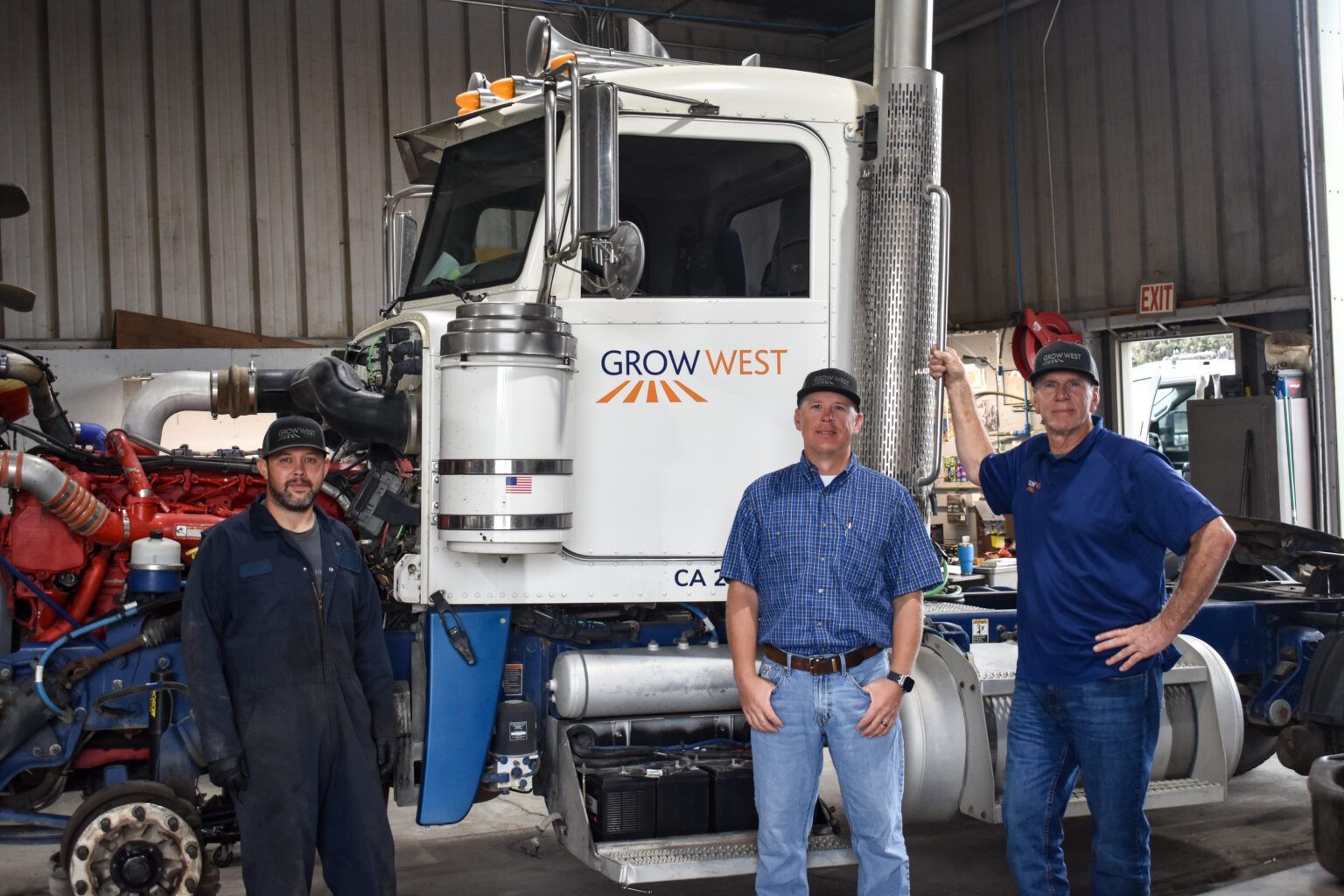
North Valley DOT Mechanic Scott Grunert, North Valley Operations Manager Eric Rush and North Valley DOT Team Manager Rick Rush.
DOT compliance across Grow West with trucks, tankers, trailers and other fleet assets
Safety is job one throughout Grow West. And nowhere does that ring truer than with the company’s DOT (Department of Transportation) teams that properly maintain service trucks, tankers, trailers and other fleet assets to ensure they are roadworthy while meeting state and federal standards.
Not only does regular upkeep catch problems while they are still small, but it also helps ensure vehicles, trailers and other transport are safe for operators as well as the community at large.
“There’s a big push to get everyone what they need, but we also have to be safe,” said Grow West Safety Manager Cole Trouberman. “It’s a big thing trying to make sure we’re providing good service to our customers and trying to be safe for our community members on the road.”
North Valley Operations Manager Eric Rush agreed. “We want everybody going home the same way they got here every day. That’s why safety is our biggest concern, and that’s why we put a lot of time and effort into it.”
The quest for safety extends beyond physical assets. It also includes weekly DOT team tailgate safety meetings, monthly safety meetings, and an annual daylong event for drivers and mechanics that is hosted by the California Highway Patrol (CHP).
As harvest winds down for grower-customers, Rush said the DOT teams’ work picks up. From August through February, “This shop’s busy season is their off season. Our slow season is when all of the equipment is in the field.”
A HEAVY JOB
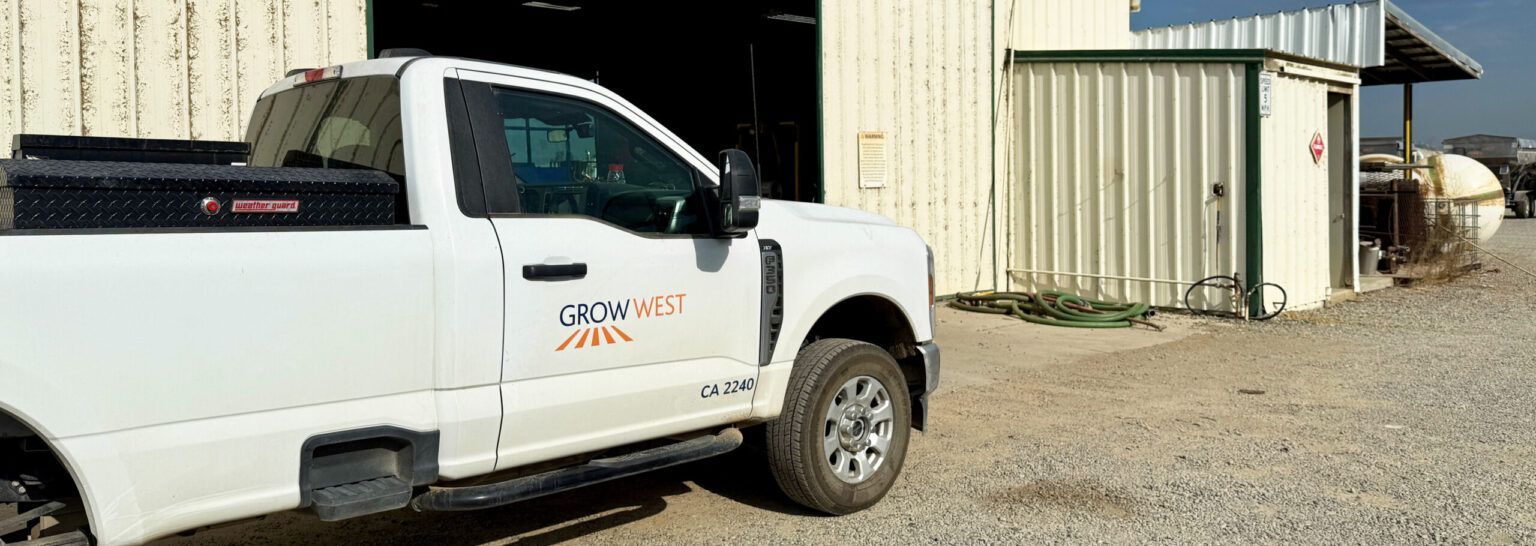
The DOT teams are responsible for maintaining, inspecting and repairing larger trucks with a gross weight over 10,000 pounds, such as Ford F-450s and Peterbilt semis, that must carry a California DOT number. They also maintain other transport assets, such as trailers, tankers and tenders, all of which are affixed with DOT numbers.
The number of trucks and transport within each Grow West location dictates the size of its DOT shop or whether it outsources DOT duties, Trouberman said. The North Coast unit, for example, works with a local DOT provider.
At Maxwell, the DOT shop is responsible for just the location’s trucks and other assets.
Nowhere is the workload greater than at the North Valley DOT shop, which handles vehicles and assets from Yuba City, Pleasant Grove, Woodland and Dixon. Altogether, that’s more than 400 trucks, trailers, tankers, tenders and other assets, Rush said.
At one time, each of the four North Valley locations had its own DOT shop. But when the locations came under the Grow West umbrella in 2019, he said they consolidated the duties into a single DOT shop near Woodland to streamline operations and be more cost-effective.
Rick Rush, North Valley DOT team manager, worked for 30 years as a Chrysler mechanic before he joined what was then Growers Ag Service near Tudor in 2017, where he performed BIT inspections.
Eric Rush, who started in construction at a young age, eventually switched to working as a diesel mechanic for a Yolo County farming operation. He joined Grow West as a setup person and mechanic in Dixon in 2011 before the consolidation. Eric now manages North Valley operations. Safety also runs in the family as he is Rick’s nephew.
Scott Grunert, a North Valley DOT team member, ran a towing operation with his father and raced cars before he joined Grow West as a setup person in 2018. He moved over to the DOT shop in 2019.
North Valley Operations Manager Eric Rush (left) and North Valley DOT Mechanic Scott Grunert are part of a team that keeps larger trucks and transport from four retail facilities safe and operational.
BASIC INSPECTION OF TERMINALS
In addition to the company’s own vehicle service requirements, Grow West falls under Federal Motor Carrier Safety Administration (FMCSA) regulations and the state Basic Inspection of Terminals (BIT) Program administered by the CHP.
Because Grow West only operates within California and operators only drive within 100 air miles of a terminal, Trouberman said the company doesn’t fall under federal regulations for long-haul or interstate trucking.
That said, Grow West still must follow several other federal rules administered by FMCSA. One is the daily vehicle inspection report (DVIR) for vehicles weighing 10,000 pounds gross or more, Trouberman said.
Each morning, drivers must complete a DVIR that involves walking around the vehicle or other transport to visually inspect for issues. Then they check tires and lug nuts, engine fluids, windshield wipers and connectors, such as trailer hitches.
“We’re able to catch issues as they arise rather than on a 90-day basis,” Trouberman said. “It’s way safer for everyone to find an issue when it’s small before it becomes a bigger issue on the road.”
At the end of the day, each operator completes the trip report, noting any problems they may have experienced, such as a strange sound or a slow tire leak. One copy of the DVIR is kept in the truck, while the other is placed in a “needs attention” box or another box if everything is fine.
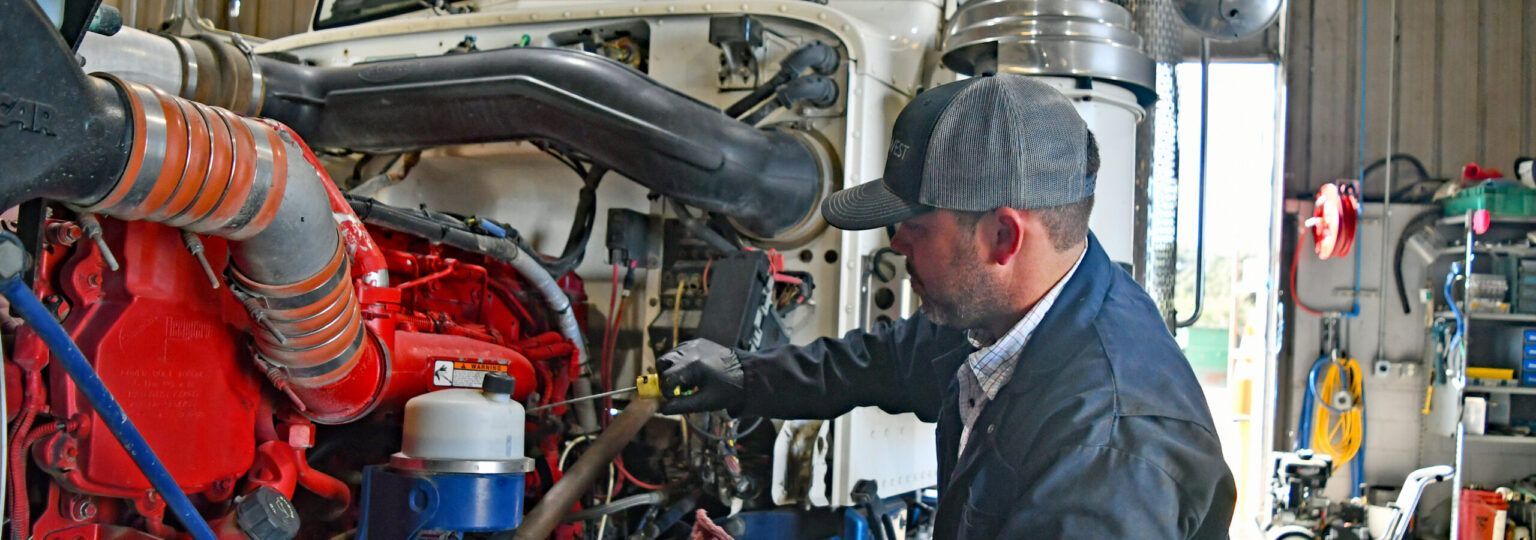
“We really rely on our drivers to let us know, so we can get it fixed,” Trouberman said. “Depending on the issue, we may take it out of service. The safety of the vehicle is our ultimate concern. It will not be back on the road until it gets signed off on by the mechanic.”
Should CHP pull over the truck driver or conduct a roadside inspection, the officer typically asks to review the daily inspection book.
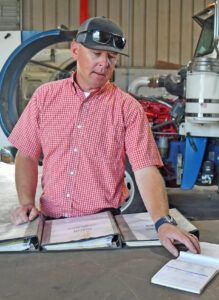
Eric Rush explains the 90-day inspection record keeping and the daily vehicle inspection report each driver must fill out.
BY THE BOOK
Under the California vehicle code, carriers must conduct their own BIT inspections at least every 90 days and complete a checklist that includes brake adjustments, brake system components and leaks, steering and suspension systems, tires and wheels, and vehicle connecting devices. As part of that, the DOT team must document the inspection date and any repairs performed, and keep the information on file for two years.
At the Grow West DOT shops, each type of truck or transport has a dedicated binder where all the reports are filed. Ken Bates, Grow West manager of safety and regulatory, works to ensure all paperwork is compliant, while Grunert and Rick Rush take care of the inspection work at the North Valley shop, Eric Rush said.
With more than 400 pieces of equipment that fall under BIT, Eric Rush said the North Valley DOT team has a huge undertaking. Broken down, Rick Rush and Grunert each average four 90-day BIT inspections every workday, 52 weeks a year.
That doesn’t count other work the team performs. Grunert, for example, recently removed rust and repainted a trailer that was looking tired. The team also works with Grow West’s engineering and/or fabrication departments when equipment parts need to be custom made.
During the in-person CHP BIT inspection, a CHP motor carrier specialist reviews maintenance and driver records to determine whether the company is complying with all state and federal regulations. In addition, the specialist will inspect a sample of vehicles based on fleet size.
If a terminal – in this case, the North Valley DOT shop – receives a satisfactory rating in every category, it won’t have to undergo another in-person inspection for 25 months. And Rush said he’s proud of the satisfactory rating Grow West continues to receive.