
Grow West Newsletter
Growing Together Fall 2025
Protecting Next Season's Yield Starts Now
Almond sanitation tips to reduce the NOW population
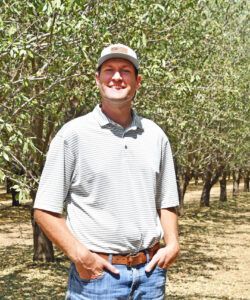
Grow West PCA Dan Bonetti
Navel orangeworm (NOW) is public enemy No. 1 when it comes to almond kernel rejects and reducing grower returns.
To combat the larval pest, industry experts promote winter sanitation as the foundation of a strong year-round integrated pest management (IPM) program. But they say almond growers shouldn’t forget the other components, including reviewing grade sheets, timely hull split insecticide sprays, mating disruption if feasible and punctual harvest.
“I basically tell the growers I work with that winter sanitation is the most important management practice they can do for NOW,” said Dan Bonetti, a Grow West pest control advisor based at the Dixon branch. “It’s important for lowering that starting population in the orchard.”
The almond industry has set a goal of 2% or lower total reject levels from all sources, of which NOW accounts for the bulk. Currently, growers lose about $100 million annually just from NOW damage, according to figures from the University of California (UC), Davis.
Unfortunately, Bonetti said, some growers have cut out winter sanitation because of cost-cutting and current low commodity prices. A 2024 UC cost-of-production study for Sacramento Valley almonds on microsprinklers estimated winter sanitation runs about $174 per acre for custom shaking and sweeping.
The cost doesn’t include the grower shredding nuts on the ground.
But Bonetti said he’s found many of the holdouts change their minds after they get reports from handlers showing high damage levels.
“What it takes for these growers to start to sanitize is getting sticker shock on their grade sheets,” he said.
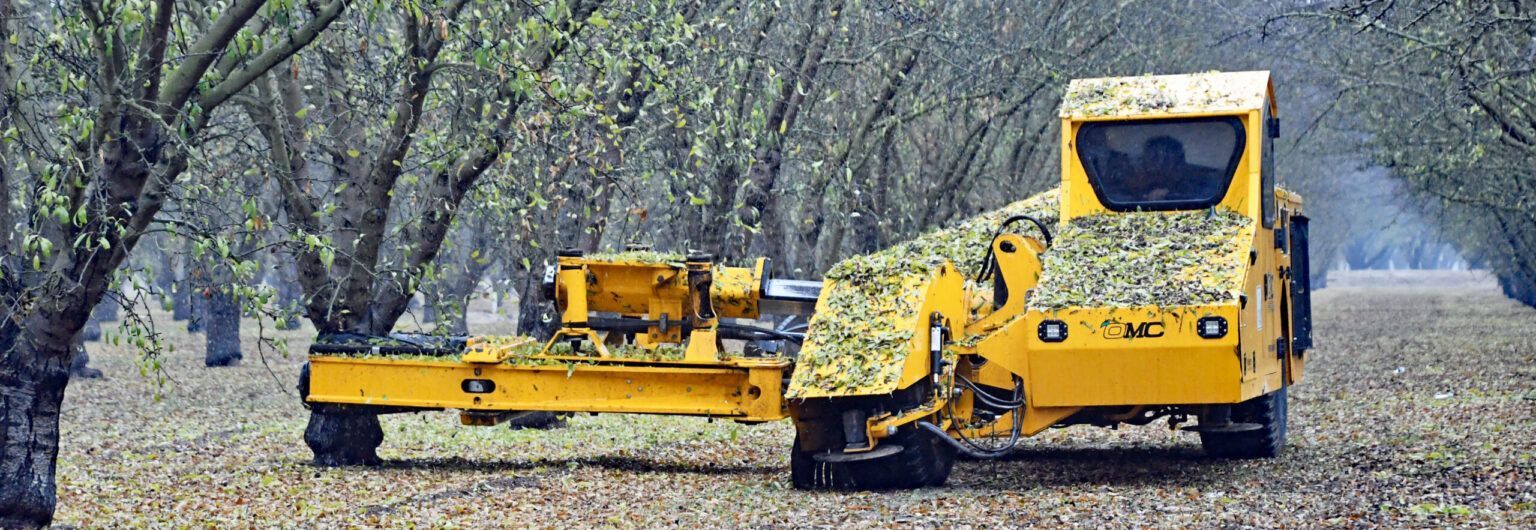
DOING THE MUMMY SHAKE
Winter sanitation involves removing mummies – nuts left on the tree after harvest – that provide overwintering food and habitat for NOW larvae. Left unabated, adult moths emerge from March to June, mate, and females lay eggs on remaining mummies, eventually producing a second moth flight.
By removing leftover nuts and then destroying them on the ground during the winter, Bonetti said growers significantly reduce the first and second NOW flights.
Joseph Connell, UC Cooperative Extension farm advisor emeritus for Butte County, calculated just 30 infested mummies on one Nonpareil tree could yield 2.3 million larvae after three generations at harvest. That’s providing there was no natural mortality and no chemical control.
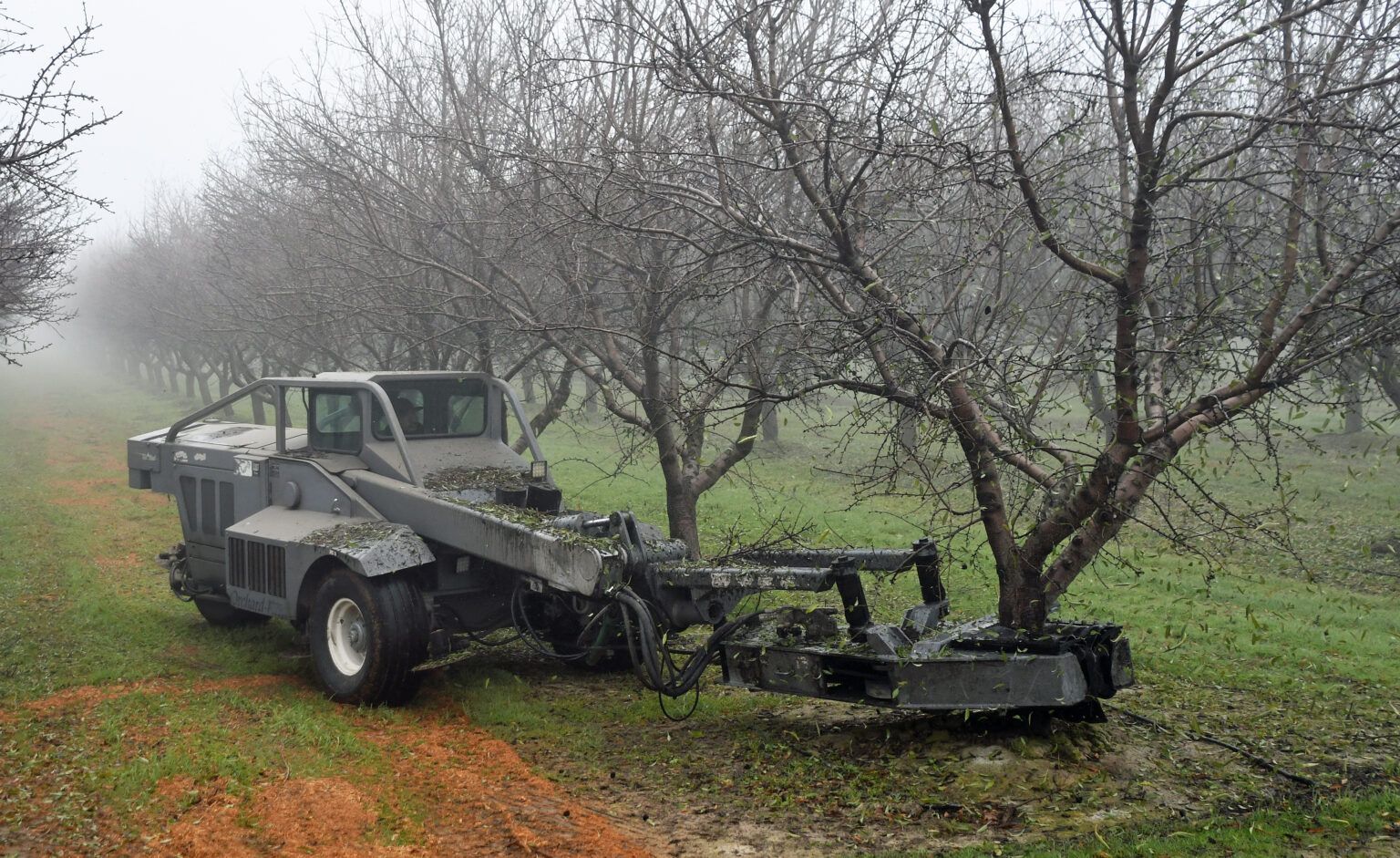
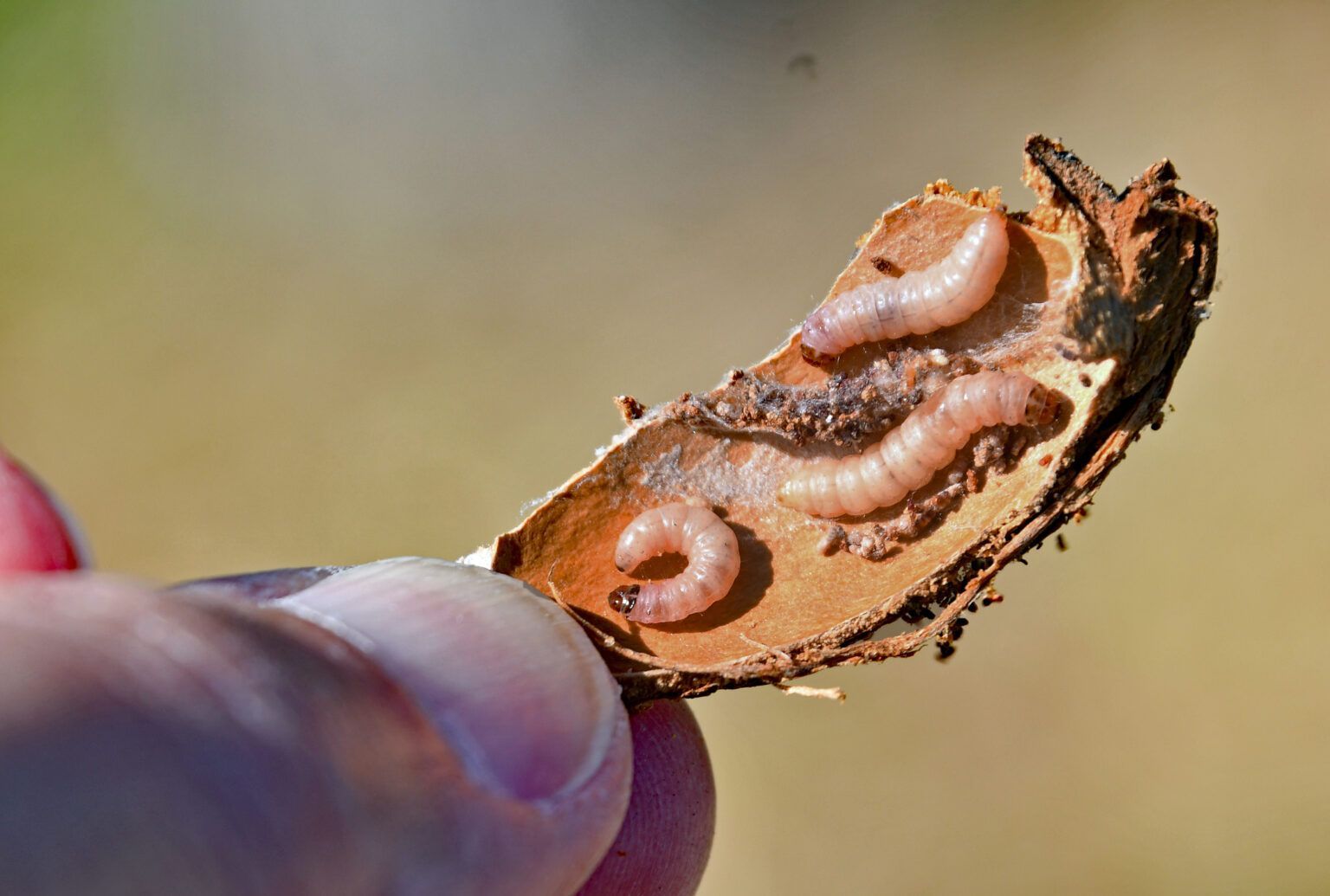
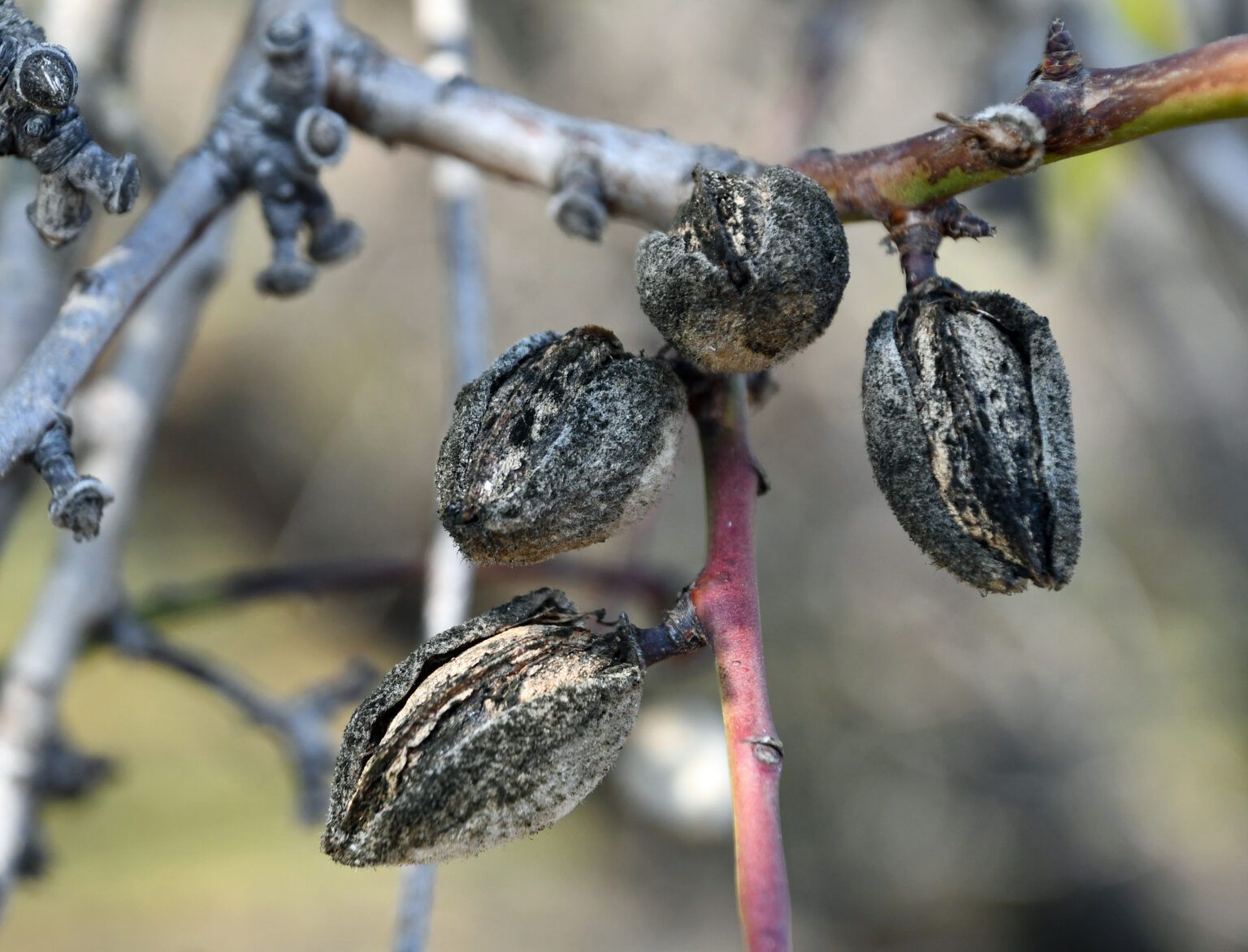
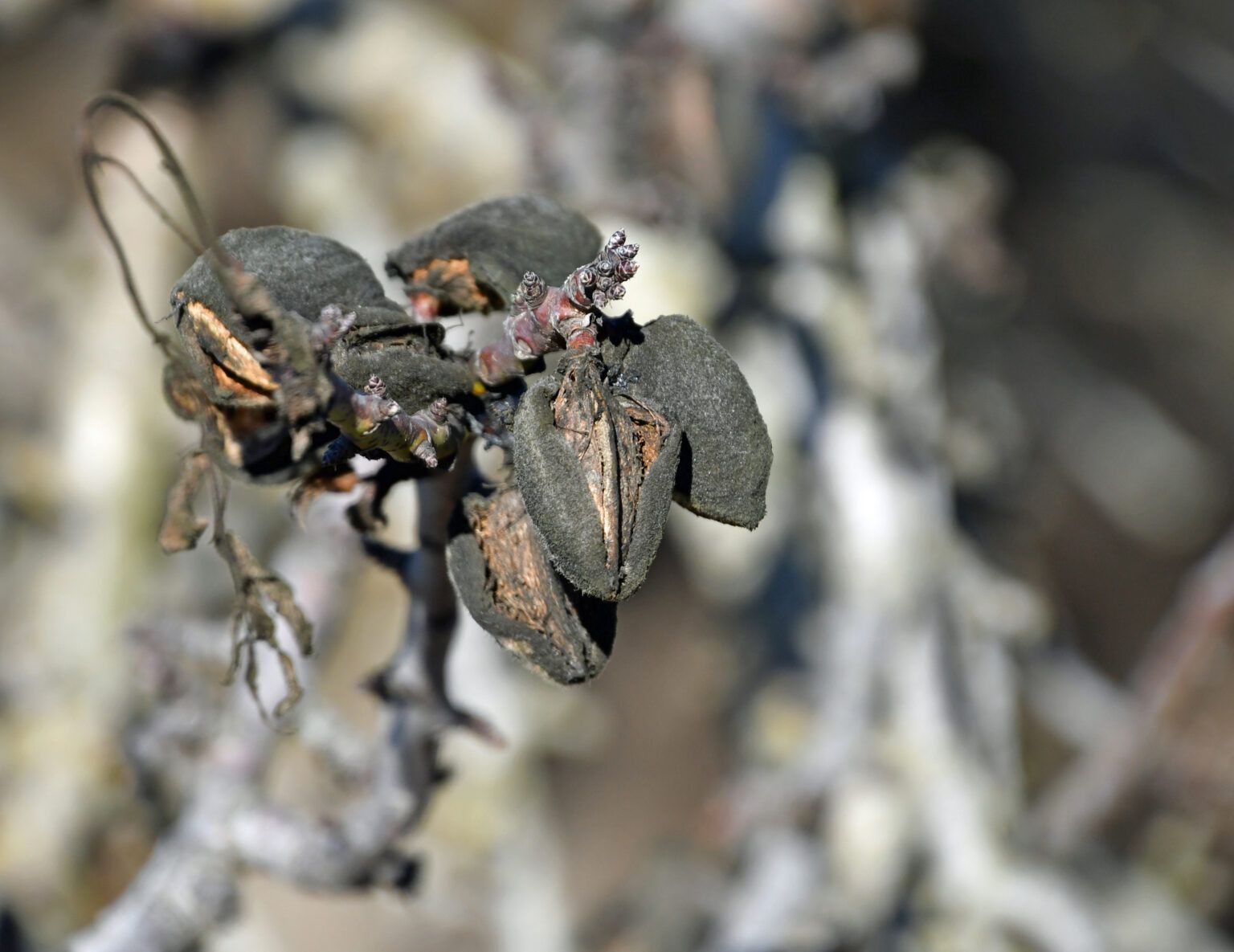
Winter sanitation involves removing mummies – nuts left on the tree after harvest – that provide overwintering food and habitat for NOW larvae.
Under the same 30-mummy scenario, winter sanitation alone would reduce the NOW population by 94%.
As part of navel orangeworm IPM, UC has set a winter sanitation benchmark of two or fewer mummies per tree. Bonetti said clients call him occasionally to look at their orchard to determine whether winter shaking is needed.
Depending on the variety and whether the area has boron issues, Bonetti said it’s frequently difficult to get a clean shake at harvest.
“As a general principle, everyone should be sanitizing because there’s no way everyone is getting a perfect shake,” he said.
ANOTHER REASON TO SANITIZE
Adding to the importance of winter sanitation is a relatively new pest, the carpophilus beetle (Carpophilus truncatus). About the size of a rice grain, adult beetles lay eggs on almonds at hull split. Both the adult and larvae feed on kernels and overwinter in mummy nuts.
“All the more reason to sanitize,” Bonetti said. “I think NOW is the reason to sanitize, and if you need more reasons, the carpophilus beetle is here.”
While some growers sanitize immediately after harvest, others will wait until after the holidays. Regardless, Bonetti said, the best time to sanitize is when they can.
Given the option, he said he prefers to wait until after a rain or higher humidity has moved in because the nuts seem easier to remove. Although wet weather may make it more difficult for equipment to get into orchards, the increased soil moisture reduces NOW survival on the ground compared to dry years.
Recently, a handful of studies have found that cover crops accelerate mummy nut degradation on the ground compared to bare orchard floors.
BLOW AND MOW
Removing mummies is just part of winter sanitation. Bonetti said growers also need to blow shaken nuts off of berms into orchard middles. No matter the ground cover, they should then disk or flail mow middles to destroy mummies on the ground.
Winter shaking should be completed before bud swell in February, with disking or flail mowing finished by March 1 before NOW emergence.