
Grow West Newsletter
Growing Together Spring 2026


Advanced technology influences how growers and aerial applicators operate
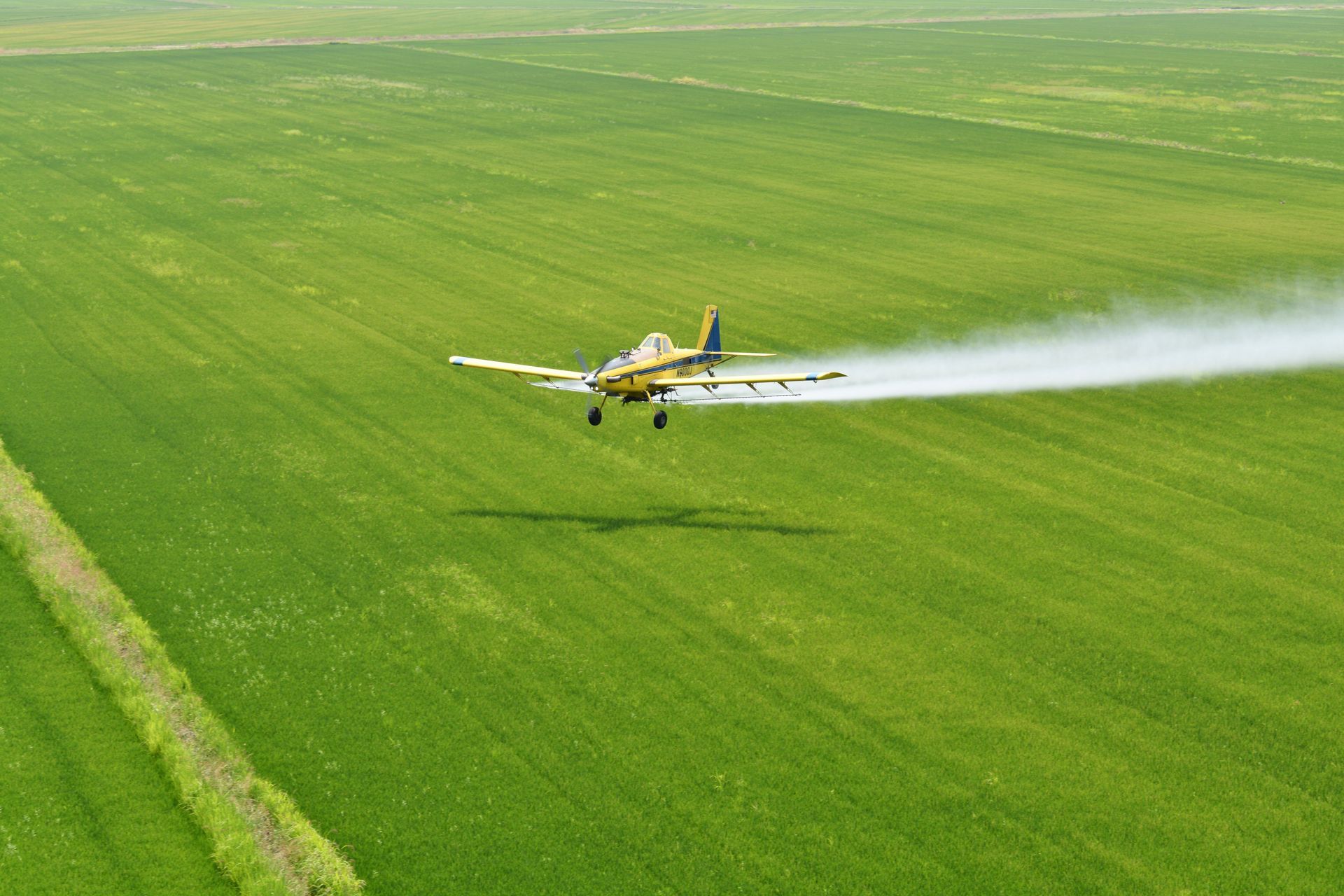
As agricultural pilots skim above fields and orchards in their planes, they strive to apply seeds, fertilizer and crop protection materials as efficiently, accurately and, above all, as safely as possible.
To achieve this, pilots use advanced technology and attend industry-hosted meetings, where their planes undergo calibration diagnostics and they receive continuing education.
“We’re always looking for new technology to produce consistent droplet size and meteorological information so we can do the job that needs to be done in the most effective way,” said Terry Gage, president of the Lincoln- based California Agricultural Aircraft Association (CAAA).
While rice is heavily dependent on aerial applicators for seeding, fertilizing and crop protection, other crops to a lesser extent also rely on planes, especially when rain keeps ground rigs out of fields.
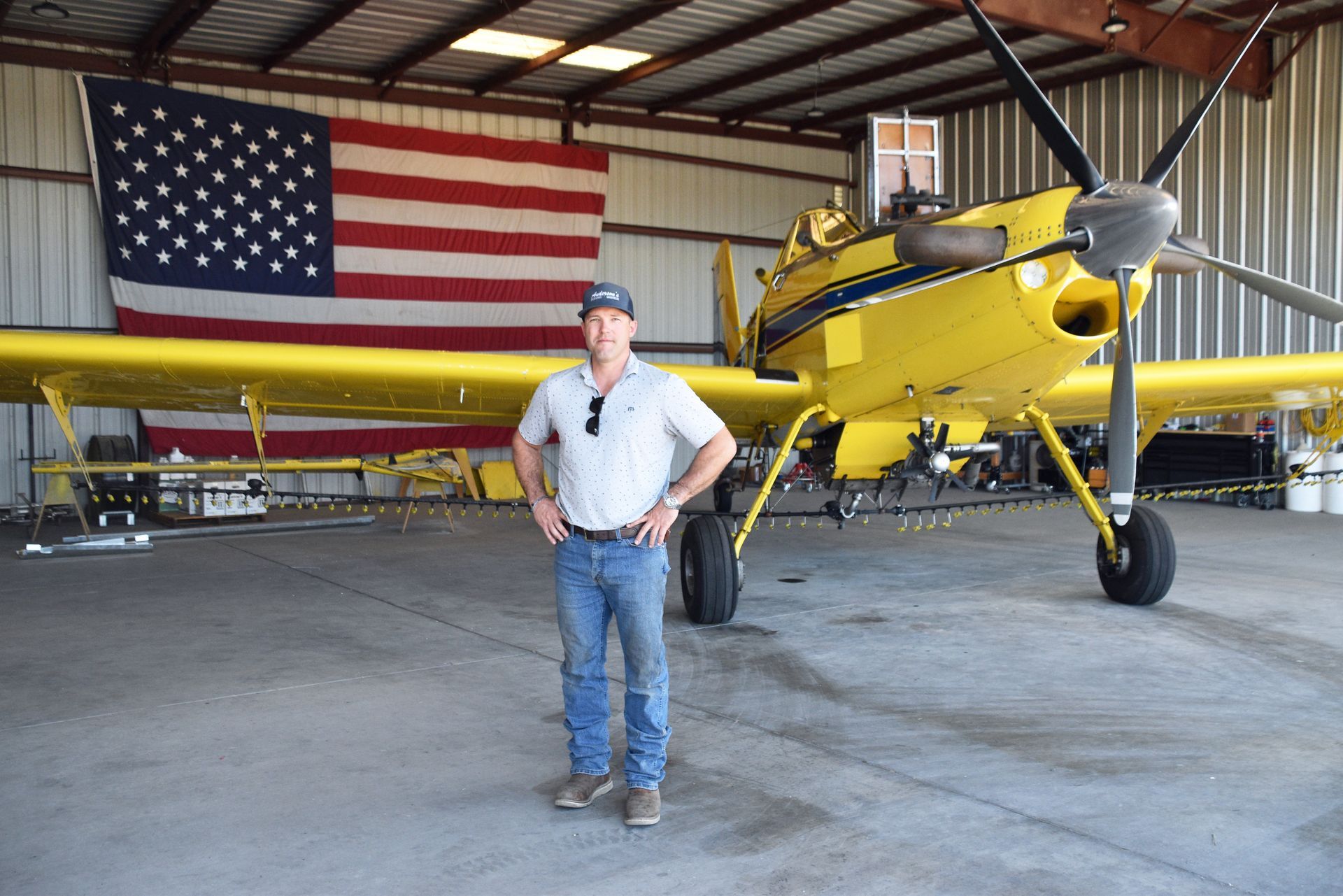
A.J. Anderson, owner/manager of Robbins-based Anderson’s Flying Service, is a licensed PCA and certified crop adviser. With an agronomy background, he may approach aerial application from a little different direction.
CHALLENGING REGULATORY CLIMATE
Applying ag materials by air in California carries unique challenges, Gage said. One is water availability, such as the 2022 drought that dried up the west side of the Sacramento Valley.
“If we don’t have water, we can’t grow crops,” Gage said.
And California regulations, which may prohibit materials or attach additional requirements, remain some of the nation’s toughest. Gage spends much of her time advocating on behalf of aerial applicators in the Legislature or within state agencies.
“We’re always feeling the regulatory oversight, and it seems like it’s always something new coming up on the books,” Gage said.
A handful of rice herbicides, for example, carry state restricted-use labels that limit aerial application to areas away from sensitive crops. Ag pilots who apply them are required to certify their planes through stewardship programs hosted by the chemical registrants.
During the fly-ins, pilots make “dummy” applications of spray loads without any active ingredients over water-sensitive paper, which is then analyzed for droplet patterns.
As with all restricted-use products, users must file a notice of intent (NOI) with the county agricultural commissioner’s office 24-48 hours before application.
While the producer ultimately is responsible for submitting the notices, some aerial applicators said they file NOIs and notices of completion as a customer service, since they have the application reports on hand.
With the advent of the Spray Days notification program, counties have become strict about submitting NOIs electronically and within the appropriate time frame.
LEARNING NEVER ENDS
As part of its educational offerings, the CAAA offers the Professional Aerial Applicator Support System (PAASS) program, at its annual meeting. Designed by pilots for pilots, the seminar tackles key safety and environmental concerns from the previous season.
Periodically, CAAA also holds an Aerial Application Technology Field Day & Fly In in Northern California and another in Southern California. The sessions are part of the National Agricultural Aviation Association’s Operation SAFE – or Self-Regulating Application & Flight Efficiency – program designed to minimize potentially adverse health and environmental impacts from ag chemical applications.
At a recent CAAA fly-in near Sacramento, attendees saw firsthand the new SwathPRO precision aerial spraying system that offers individual nozzle control from inside the cab, reducing drift by up to 90%. Gage said a couple of association members in the state have already installed the new units and are happy with their performance.
RICE IS A MAINSTAY
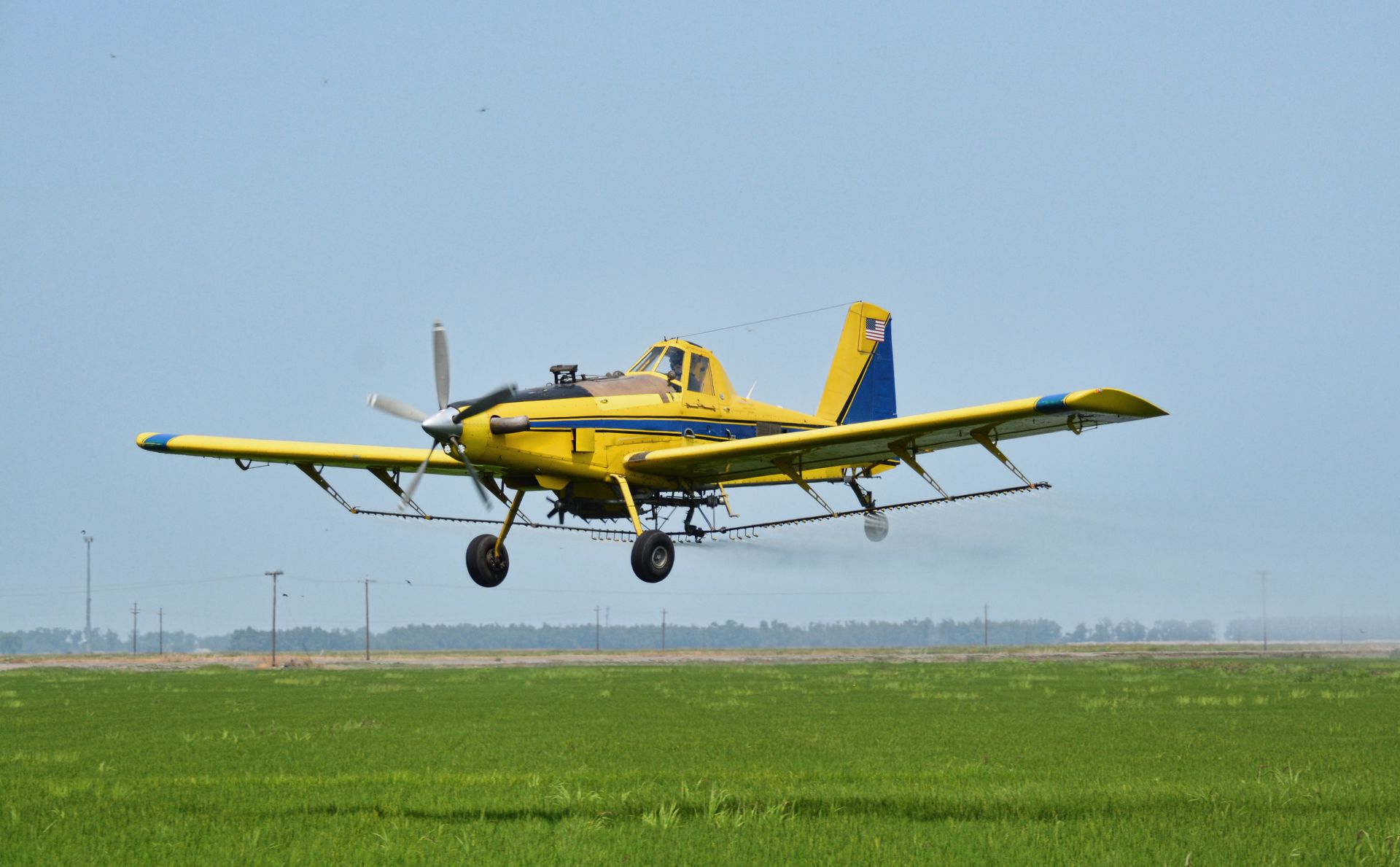
Like many Northern California ag aviation operations, rice is Anderson’s Flying Service’s bread and butter, said manager-owner A.J. Anderson. The Robbins-based aerial application service operates three ag planes and expects a fourth this spring.
All are equipped with DGPS – or differential GPS – to provide greater location accuracy than standard GPS, he said. They’re also outfitted with rate controllers for dry materials, which are relatively new to the industry, as well as for liquid and spray materials.
Pest control advisers typically send recommendations electronically to aerial applicators. At least at Anderson’s, they pull them into specialized software to create job orders and application maps. They also include a satellite image to aid the pilot with field location.
Steve Anderson, A.J.’s father and a veteran pilot, continues to fly during the season. Any new ag pilot, even with experience elsewhere, undergoes additional training before moving into the cockpit, A.J. Anderson said.
That includes working on the ground crew, and loading and maintaining aircraft to learn industry-standard procedures and safe material mixing and handling.
“A ground crew will make or break a season,” Anderson said. “It also builds that trust and that cohesiveness as a team.”
And training never ends. Anderson’s Flying Service is a strong supporter of NAAA, CAAA and the PAASS program. Anderson also sits on the Yuba-Sutter Farm Bureau’s Spray Safe program committee. The free annual continuing education event – designed for farmers, applicators and PCAs – promotes safe pesticide application and drift reduction.