
Grow West Newsletter
Growing Together Winter 2026
From Family Roots to Public Service
How Charlie Hoppin and his family are shaping California agriculture
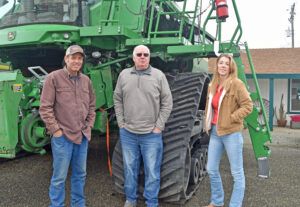
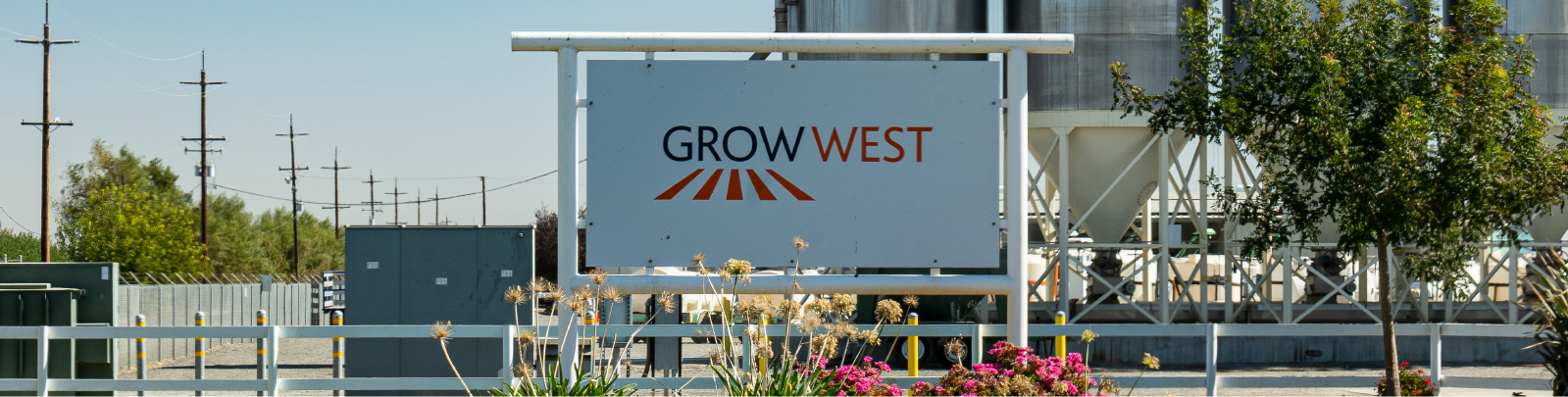
Photo: Vicky Boyd – Left to right: Casey, Charlie and Kelly Hoppin run a diversified farm and walnut huller in Sutter County.
As an oil truck driver delivering to farms and ranches, Charles R. “Ross” Hoppin Jr. saw the challenges farmers endured and discouraged his son, Charlie, from going into the profession.
The younger Hoppin ignored his father’s advice. He left California State University, Chico, shortly before graduating and started a livestock operation in Sutter County. He eventually moved to row crops.
Charlie admitted they struggled during the early years and said his wife Kathy’s teaching salary was essential in helping start the farm. But things turned around when he started growing seedless watermelons.
As Charlie built Hoppin Family Farms near Yuba City, he also entered public service, particularly with water and agricultural groups.
THE NEXT GENERATION
When his son and daughter, Casey and Kelly, were growing up, Charlie didn’t discourage them from returning to the farm, but he did have one rule. They must first do something off-farm to gain fresh perspectives.
Both children graduated from Cal Poly San Luis Obispo, and eventually came back. Over the years, the crop mix also evolved. Gone are the seedless watermelons and processing tomatoes.
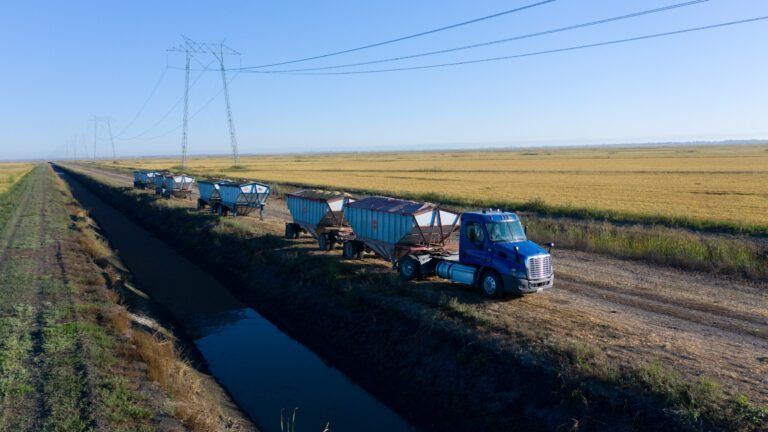
Today, the farm’s main crop is rice. Other row crops include wheat, safflower, white corn for tacos, and this year, sunflowers for oil. They also have walnut trees.
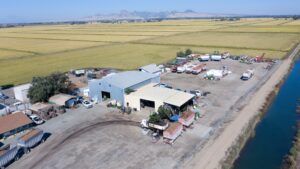
The Hoppins added a walnut huller and dryer in 2017, which Charlie said served two goals. The person who was hulling their crop was probably going to close shop soon, and he didn’t want to scramble to find a replacement.
Plus, Charlie joked, the huller was part of the farm’s succession plan to test the kids’ compatibility.
“It’s important that the kids are both f iscally responsible with money,” he said. “I think both of the kids are well prepared, and I think the walnut huller has helped with that. During the season, the two of them have to work together, and they each play a critical role.”
COMMUNICATION IS KEY
Grow West pest control advisor (PCA) Ian McCormack primarily handles Charlie’s rice fields, while PCA Katie Kett services his other crops.
After harvest, McCormack meets with Charlie to review the past season. When making crop decisions, Charlie takes a long-term approach, which he described as part of their personal sustainability philosophy.
“I think the way we look at it is the ground is an integral part of what we do, and we need to keep the soil healthy and we need to keep our trees healthy,” he said.
From their discussions, McCormack develops field plans for the upcoming rice season, expecting they’ll change as unforeseen pests or other issues crop up.
Irrigator Juan Alvizo is included in planning because timely water management, such as flooding fields before planting, lowering water for herbicide treatments or bringing up water afterward, is critical to maximize rice yield potential.
Much like a well-choreographed dance during pre-planting, Grow West delivers aqua ammonia tanks with the appropriate hoses and pumps. They also bring trailers of dry starter fertilizer and a fertilizer spreader to the correct fields.
“It takes a large amount of constant communication from people in the office and at the warehouse, and the service techs are paramount for us at Grow West,” McCormack said.
Casey praised Wyatt Jensen, field service representative with Grow West’s Yuba City location, for anticipating their needs.
“He’s almost like a secret agent – he doesn’t need to call,” Casey said, adding they text throughout the day. “He’s always a step ahead of me.”
As the rice crop germinates, McCormack begins scouting fields up to several times per week, depending on the growth stage. If he finds something of concern, he and Charlie discuss the best approach.
YEAR-ROUND THINKING
With at least one of Hoppins’ crops in the ground year-round, Kett has little downtime. walnut trees.
“Charlie is always thinking about things,” she said. “Even during the winter, we’re brainstorming things.”
As crop plans are finalized, Kett drafts pest management and fertilizer plans to optimize crop health and yield. Because every season is different, she chooses the best products based on economics and the particular situation.
“I’ve already checked with the office to see what we have in inventory, so I know what I need to bring in,” she said.
Winter wheat is planted in the fall, followed by corn, sunflowers and safflower in the spring. During spring, walnut trees also leaf out. Each crop requires different scouting approaches, such as monitoring for mites in corn or trapping for codling moth in walnuts.
“In row crops and walnuts, you’re constantly monitoring everything. Sometimes it’s every three days,” she said.
A LIFETIME OF PUBLIC SERVICE
Charlie got an initial taste of public service when he joined the Farmers’ Rice Cooperative board of directors in the early 1990s, eventually becoming vice chairman. He also served on the California Rice Industry Association board, the Sutter Mutual Water Co.’s board and the California State Board of Food and Agriculture from 2002 to 2006.
Charlie made headlines when then-Gov. Arnold Schwarzenegger appointed him as the first farmer to serve on the California State Water Resources Control Board in May 2006. He was appointed board chairman in March 2009 and served until he retired in 2013.
Although the water board faced many contentious issues during his tenure, Hoppin said the Yuba Accord is one he’s proud of. Described as a model settlement agreement, the accord balanced the water needs of fish and wildlife, irrigation, hydropower generation, recreation and other uses on the Lower Yuba River.
Charlie may not devote as much time to public service as he once did, but he still remains active in water issues, serving on the boards of Levee District 1 of Sutter County and the Sutter Butte Flood Control Agency.
Casey and Kelly have followed in their dad’s footsteps of public service, although both said they did so of their own accord.
Casey sits on the Sutter Mutual Water Company board, while Kelly serves on the Reclamation District 1500 board and the Sutter Yuba Community Foundation board, which provides grants and other funding for nontraditional needs.